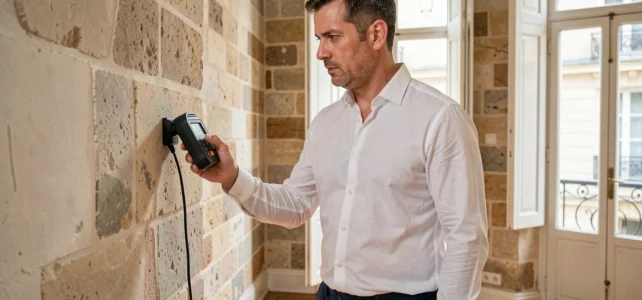
A DPE conducted before July 1, 2021, is now legally void. We regularly observe sale files based on outdated diagnostics, without the seller or notary realizing it. The question is not whether real estate diagnostics are mandatory, but whether those included in the file are still usable at the time of signing.
Actual validity of real estate diagnostics: the trap of expired DPEs
The DPE reform that came into effect in 2021 rendered all energy performance diagnostics carried out according to the old method obsolete. In 2025 and 2026, many sellers believe they are compliant while their DPE is unusable. The document physically exists in the technical diagnostic file, but it has no legal value anymore.
A diagnostics expert does not just produce a report. They first audit the validity of each document in the existing DDT. This preliminary check avoids situations where the compromise is signed with an expired diagnostic, which exposes the sale to challenges or requests for price renegotiation.
We recommend having the entire file checked even before putting it up for sale, and not when the buyer starts asking questions. At this stage, you can discover the services of Detectis Immo to assess the compliance of your diagnostics ahead of a transaction.

Unified energy audit: what the 2024 decree changes for transactions
Decree No. 2023-1219, applicable since July 1, 2024, has unified the mandatory regulatory audit for sale (for houses and buildings in single ownership classified E, F, or G) and the former incentive audit aimed at renovation. The result is a unified energy audit with harmonized content.
This merger has direct consequences on the work of the diagnostician. Audits must now be produced in an exploitable digital format, with quantified and prioritized work scenarios. A professional not trained in this new framework risks delivering an incomplete or non-compliant document.
Houses classified E, F, G: the audit as a negotiation lever
For the properties concerned, the unified energy audit is not just an administrative document. It contains work recommendations with estimates of energy class gains. An informed buyer uses it to negotiate the price.
An experienced diagnostician calibrates their renovation scenarios taking into account the real constraints of the building (stone walls, co-ownership, ABF zone). A poorly calibrated audit skews the negotiation in both directions: it can overestimate the cost of work or underestimate it.
Recalculation of the DPE and correction of the electricity-gas bias
The government has modified the primary energy/final energy conversion coefficients within the framework of the DPE, reducing the historical advantage of gas over electricity. This recalculation alters the energy classification of many gas-heated homes, which may lose a class.
For a seller, the consequence is direct: a property classified D with the old coefficient may shift to E after recalculation, triggering the obligation for an energy audit and potentially changing the rental conditions. Only a certified diagnostician masters the updated parameters of the new calculation.
DPE for small surfaces: a specific calculation method
Small surface housing (studios, T1) were systematically penalized by the DPE calculation method, which related consumption to square meterage. A methodological correction has been introduced to smooth this bias. An up-to-date diagnostician applies this correction, which can elevate a studio previously classified F or G by one class.

Responsibility of the diagnostician and buyer’s recourse in case of erroneous DPE
An erroneous DPE is not without legal consequences. Case law recognizes the responsibility of the professional diagnostician when the energy classification communicated to the buyer turns out to be false. Possible recourse for the buyer includes:
- Enforcement of the professional civil liability of the diagnostician, covered by their mandatory insurance
- An action for price reduction based on hidden defects, if the energy class discrepancy substantially affects the use of the property
- A request for compensation for loss of enjoyment, when actual energy costs significantly exceed those announced
An erroneous diagnostic engages the chain of responsibility up to the notary who accepted the DDT without verification. Engaging a certified and insured diagnostician protects both the seller and the buyer.
Diagnostics before renovation work: an unknown obligation
Beyond sale and rental, technical diagnostics are mandatory before certain renovation works. Asbestos detection before work (RAT) and lead diagnostics before work concern any construction site affecting materials that may contain these substances.
We observe that this obligation is frequently ignored by individuals who undertake work without going through a diagnostician. The risks are twofold:
- Exposure of occupants and workers to asbestos fibers or lead dust during the construction site
- Criminal liability of the project owner in case of an accident or occupational disease related to the lack of detection
- Work stoppage imposed by labor inspection if the RAT has not been carried out
Asbestos detection before work is distinct from the asbestos diagnostic of the DDT. The former targets materials that will be actually disturbed by the construction site, with samples and laboratory analyses. The latter is limited to a visual inspection of accessible materials.
Each recent reform of the regulatory framework, whether concerning the DPE, unified energy audit, or rental thresholds, expands the scope of intervention of the real estate diagnostician. A file prepared by a professional up to date with these developments remains the only tangible guarantee against a post-signature dispute.