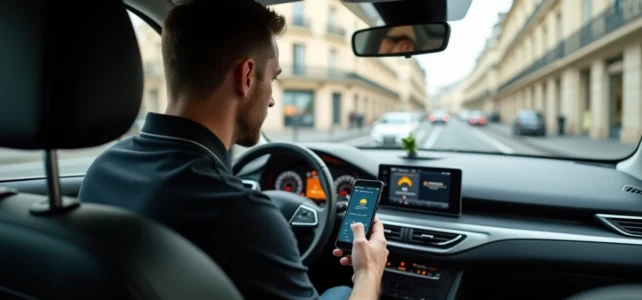
The taxi sector in France is undergoing rapid changes, driven by landmark court decisions, targeted government aid, and the scheduled arrival of autonomous vehicles. What indicators can measure the extent of these changes for taxi drivers and VTC platforms in 2026?
Taxis and VTC in France: Data that Oppose Two Models
The 2025 report from the National Observatory of Public Transport for Passengers provides a basis for comparison between taxis and VTCs. Several indicators outline two distinct trajectories.
| Indicator | Taxis | VTC |
|---|---|---|
| Access to the profession | Regulated license (ADS), limited number per prefecture | Professional card after examination, no cap |
| Pricing | Regulated by annual prefectural order | Free, with price known in advance on the platform |
| Dominant motorization | Hybrid and diesel still predominant, electric transition underway | High proportion of recent vehicles, hybrid/electric mix |
| Regulatory pressure 2026 | Strengthening of controls, specific fuel aid | Law against fraud, increased penalties for electronic hitchhiking |
The difference in pricing framework remains the main point of friction. Platforms like Uber or Bolt now offer a fixed price before the ride, including for partner taxis. In Lyon, Bolt has launched a taxi service with a known fare in advance, further blurring the line between the two statuses.
To follow news on Veritaxis, professionals have access to a regularly updated feed covering these regulatory and economic developments.
Uber’s Conviction by the Paris Court: A Precedent for the Taxi Sector

The Paris Economic Activities Court has convicted Uber for unfair competition through confusion and parasitism regarding Parisian taxis. The issue was an advertising campaign that misappropriated the characteristic light sign of Paris taxis. The decision also qualifies this as unfair commercial practice towards consumers.
This ruling goes beyond a simple dispute between two players. It establishes a legal framework regarding the use of visual codes specific to taxis by VTC platforms. Any marketing campaign that incorporates distinctive elements of taxis (color, signage, lights) is now subject to legal action on this basis.
However, the decision does not call into question the economic model of the platforms. It penalizes the confusion maintained in communication, not the service of connecting passengers. VTC drivers are not directly affected, but platforms will need to adapt their advertising strategies.
Government Aid and Economic Pressure on Taxi Drivers in 2026
The year 2026 confronts taxi drivers with a significant increase in operating costs. Fuel prices and taxation weigh heavily on the profitability of rides, to the point that the CFDT speaks of major difficulties for mobile professionals.
The government has responded with two targeted measures:
- Exceptional cash advance corresponding to a 25% down payment on the annual fuel tax refund, paid in two installments (June and then September)
- Opening access to the ecological bonus for taxis wishing to acquire an electric vehicle, facilitating the energy transition of the fleet
- Strengthening controls on informal arrangements (rental of professional cards, non-transparent fleet managers), with penalties increased by the law against fraud
The ecological bonus for taxis represents a concrete lever for renewing the fleet. Hybrid and diesel vehicles still dominate the fleet, but easier access to aid could accelerate the shift towards electric. The announced partnership between Uber and HYSETCO around hydrogen taxis and VTCs in Île-de-France illustrates another path to decarbonization, still experimental.
Robot Taxis and Autonomous Vehicles: Waymo Opens a Subsidiary in France
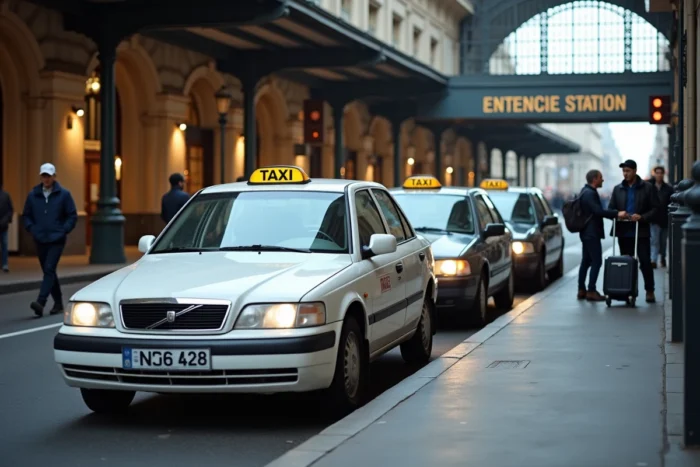
Waymo, Google’s subsidiary dedicated to autonomous driving, has created a legal entity in France. This establishment prepares for the deployment of autonomous taxis in Paris, although no specific timeline for service launch has been communicated.
The potential arrival of robot taxis raises concrete questions for the profession. The model relies on driverless vehicles, which eliminates the driver position. For taxi license holders, whose value partly depends on the scarcity of supply, the introduction of autonomous fleets could alter the market balance.
The European directive on digital platforms adds a layer of complexity. It could redefine the value of parking permits (ADS) based on the space allocated to new technological players. Drivers who have invested in a license are closely monitoring these developments.
Several technical and regulatory obstacles remain to be overcome before commercial deployment:
- Approval of autonomous vehicles on French public roads
- Definition of liability regime in case of an accident without a driver
- Social acceptability in a sector where the driver-passenger relationship remains a differentiating factor
The autonomous taxi will not replace the driver in the short term, but Waymo’s French subsidiary marks an irreversible step in the transformation of passenger transport. Taxi professionals have an interest in integrating this data into their strategy, whether it concerns the valuation of their license or the choice of their next vehicle.