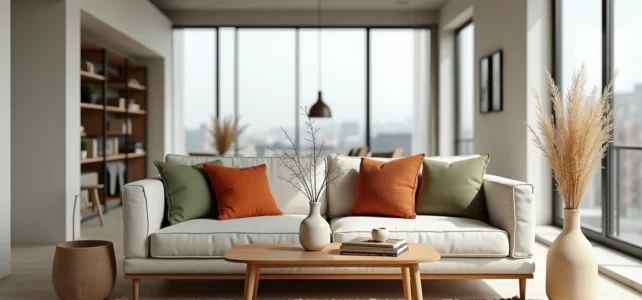
A sofa that seemed perfect in the store feels overwhelming once placed in the living room. We’ve all experienced this gap between the idea of trendy decor and the reality of a space that imposes its constraints. Volumes, natural light, daily use: these concrete parameters dictate choices much more than the palettes spotted on Pinterest.
Sensory decoration: going beyond the visual to inhabit an interior
Most decor articles talk about colors and shapes. We forget that the first impression upon entering a room also comes from touch and smell. Sensory decor emerges as a strong focus, with materials we want to touch and ambient scents that anchor an atmosphere.
Concretely, this translates into choices of textured textiles (thick bouclette on a sofa, crumpled linen on cushions) rather than yet another debate about wall color. A fabric we touch matters as much as a color we look at. Scented candles or reed diffusers complete the ensemble without visually overwhelming the space.
For those who want to learn everything about La Petite Déco, it’s a good starting point to explore decor ideas that go beyond the purely visual and incorporate this tactile dimension into both the living room and the bedroom.
Dark and immersive colors in the living room: daring contrast
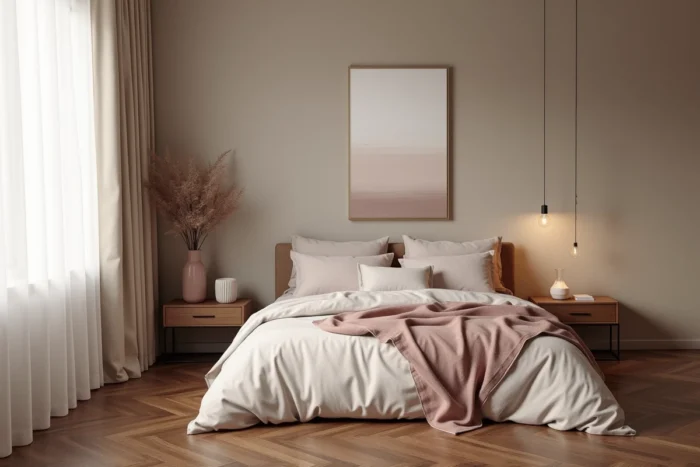
We’ve been hearing about beige, sage green, and neutral tones for several seasons. Light shades remain safe bets. However, the trend for 2026 marks a shift towards enveloping colors: deep brown, midnight blue, plum.
Dark colors visually enlarge a well-lit space by creating a sense of depth. The trap is applying them in a room that already lacks natural light. In this case, limit the dark shade to one wall or a section of a bookshelf, and compensate with indirect lighting (wall sconces, warm white LED strings).
The practical tip: before repainting an entire wall, apply a large sample (at least one square meter) and observe it at three different times of the day. A splendid midnight blue at noon can become oppressive at dusk if the room faces north.
Combining dark colors and warm materials
A plum wall works better when surrounded by light wood or rattan. The contrast between the depth of the color and the warmth of the material avoids a cave-like effect. Opt for a natural oak coffee table, a jute rug, or birch shelves to balance the whole.
Chrome and shiny finishes: the return of a forgotten material in interior decor
For years, brushed brass and matte black have dominated decorative hardware. Chrome is making a strong comeback in current decor trends. Lamp bases, furniture handles, accent table structures: these cool finishes provide an interesting contrast with the ubiquitous organic materials (wood, stone, rattan).
Chrome works as an accent, not as a base. One or two chrome elements per room are sufficient. Beyond that, it shifts into a cold aesthetic that contradicts the cocooning spirit sought in most interiors.
Opinions vary on this point: some find that chrome reflects too much light in a south-facing living room, while others appreciate this shine. The practical rule is to test a small object (a vase, a candle holder) before investing in an entire piece of furniture.
Concrete decor project: where to start without getting scattered
The endless moodboard syndrome affects many projects. We pin dozens of inspirations on Pinterest, hesitate between retro style and Scandinavian design, and in the end, nothing changes. Here’s an operational method to move forward:
- Start with the room you use the most (often the living room), not the one you want to show to guests. Decoration should primarily serve daily life.
- Set a pivot element: an existing sofa, a painting you love, a floor color you won’t change. Everything else revolves around this anchor.
- Limit the palette to a maximum of three colors (one dominant, one secondary, one accent). This constraint simplifies every purchasing decision.
- Allocate a separate budget for textiles (curtains, cushions, throws), as textiles transform a room at a lower cost.
This approach avoids impulsive purchases and returns to the store. An interior decoration project progresses better with clear constraints than with total freedom.
Mixing styles without creating chaos
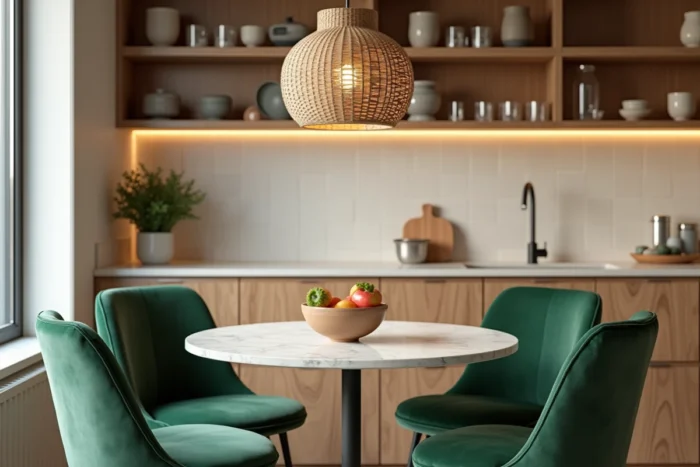
A retro armchair can coexist with a designer table if a common thread connects them. This thread is often the material or color, rarely the shape. A green velvet armchair and a chrome metal table work together if the green is echoed in a cushion or a vase placed on the table.
Coherence comes from the discreet repetition of an element, not from uniformity of style. Two or three color or material echoes in a room are enough to create visual harmony, even among furniture from different eras.
Home decor ideas: costly mistakes
Buying a piece of furniture with the right dimensions remains the main friction point. An oversized corner sofa blocks circulation in a modestly sized living room. Before any purchase, outline the dimensions of the furniture on the floor with tape. This trick takes two minutes and avoids weeks of regret.
The other common mistake concerns lighting. A single central ceiling light flattens the atmosphere of a room. You gain atmosphere with three distributed light sources: a reading lamp, a pendant above the table, and indirect lighting behind a piece of furniture.
Three light sources are better than a single powerful ceiling light. This principle applies to the living room, bedroom, and even the bathroom.
Lastly, a often overlooked point: the wall behind the sofa. A large painting or a composition of frames adds verticality and prevents the eye from stopping at mid-height. Paintings should be placed at eye level when seated, not standing, as it is from the sofa that they are most often viewed.