Interior decoration in 2026 is structured around three axes: the modularity of spaces, the reuse of materials, and a color palette that moves away from the dominant white. These decor trends are not just a simple aesthetic renewal. They respond to concrete constraints, whether regulatory, economic, or related to the evolution of lifestyles within the same home.
Modular furniture and evolving layouts: beyond space-saving
Modularity refers to the ability of a piece of furniture or layout to change configuration without replacement. Extendable tables, removable partitions, repositionable storage: these elements allow a single room to serve multiple functions depending on the time of day or life stages.
A Houzz report published on September 2, 2026, documents this evolution. Intergenerational cohabitation is identified as one of the main driving forces. When three generations share the same living space, a living room must be able to transform into a guest bedroom or office in just a few minutes.
To explore the decor ideas from Salon Tendances Habitat, this type of furniture serves as a recurring thread, proving that the trend goes beyond a simple niche concept.
What distinguishes today’s modular furniture from convertible furniture of previous decades is the quality of mechanical fastenings. Tenon joints, clips, and threaded inserts replace permanent gluing. The furniture can be disassembled, reconfigured, and transported without material loss.
PEMD diagnosis and material reuse in decoration
The PEMD diagnosis (Products, Equipment, Materials, Waste) requires, since September 1, 2026, the identification of assemblies and the assessment of the potential for material reuse during renovations. This obligation changes the way a decor project is conceived.
In practice, a wall covering or flooring installed with mechanical fastenings (clips, screwed battens) can be removed and reused elsewhere. A glued covering, on the other hand, ends up as waste. The choice of installation method becomes a decorative as well as ecological criterion.
Consequences on the choice of materials and furniture
Detachable furniture is becoming more relevant. A solid wood piece assembled with tenons can be disassembled, repaired, and resold. A glued and stapled particle board piece cannot withstand a second assembly.
- Clickable coverings (floating floors, interlocking PVC tiles) facilitate removal without destruction and fit into the PEMD logic.
- Paints and wallpapers not linked to energy improvement fall under the normal VAT rate, which impacts the pure decoration budget.
- Mechanical fastenings (screws, inserts, clips) allow for clean disassembly and increase the material’s reuse value.
This regulatory constraint directs decoration towards durable materials and reversible finishes, far from the “throwaway” mentality that dominated cheap interiors.
2026 Color Palette: Deep Colors Replace White
The omnipresent white of Scandinavian interiors is giving way to saturated and earthy tones. Deep clays, golden sands, and terracotta create a palette that warms the space without darkening it.
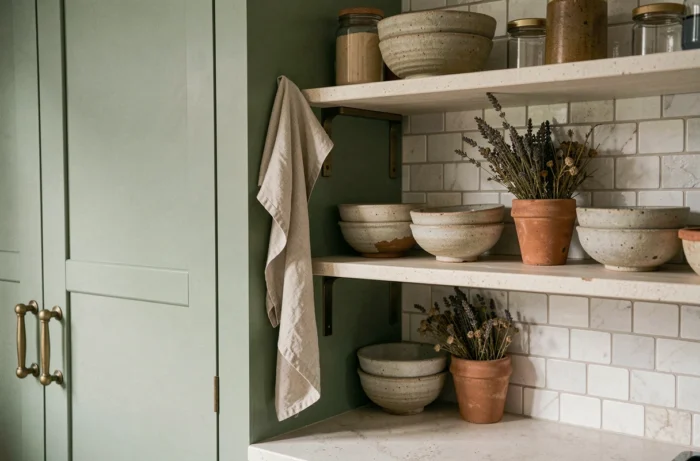
Transformative Teal, named color of the year by WGSN and Coloro, illustrates this movement. This deep green-blue works well as wall paint, textile, or accessory. It pairs with natural materials (linen, raw wood, ceramics) to create an enveloping atmosphere.
Combining Deep Colors and Natural Light
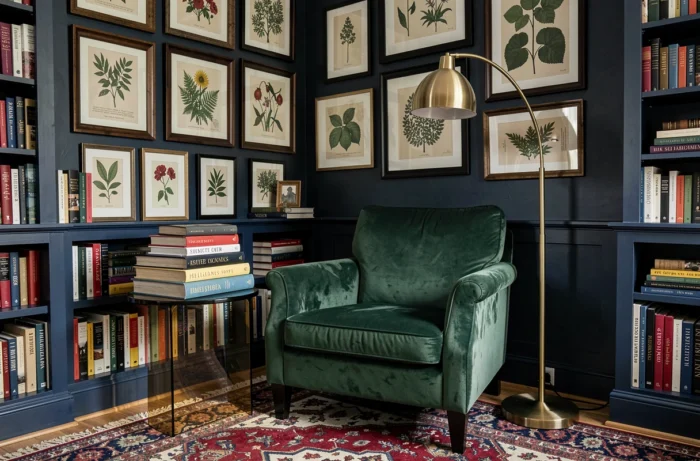
A dark color on all four walls of a poorly lit room creates a cave-like effect. The recommended approach is to reserve deep shades for one or two walls, keeping light surfaces facing the light sources.
Matte finishes absorb light, while satin finishes reflect it. On the same terracotta wall, a matte finish gives a mineral appearance, while a satin finish adds depth. The choice of finish is as important as the choice of color.
VAT and Decorative Works: What the Regulation Distinguishes
Since March 1, 2025, justifying the applicable VAT rate for works requires a mention on the quote or invoice, rather than the old paper certificate. This administrative simplification hides a distinction to be aware of before starting a decoration project.
Decorative paint alone falls under the normal VAT rate. Works deemed “induced,” directly related to an energy improvement operation (for example, repainting a wall after internal insulation), may benefit from the reduced rate under certain conditions.
In practical terms, repainting a living room to change the ambiance does not qualify for any VAT reduction. Repainting a wall after installing thermal insulation may qualify, provided the link between the two operations is mentioned on the invoice.
Natural Materials and Raw Style: Wood and Linen as Centerpieces
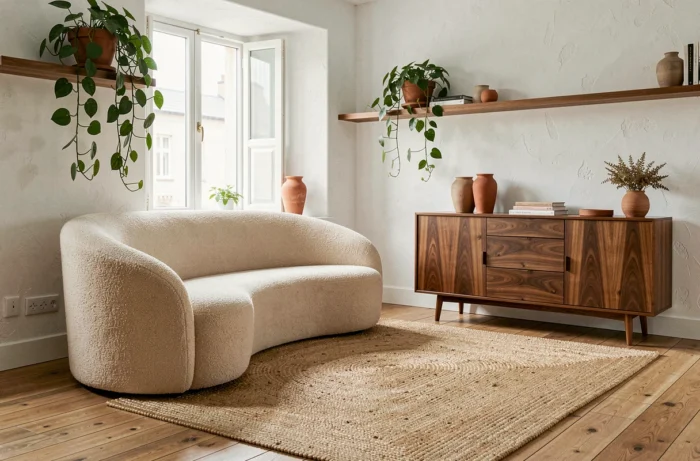
Raw wood and linen are returning as reference materials, but not in their “rustic” version. Dark wood (walnut, smoked oak) replaces the light woods that have dominated interiors for a decade. Linen, used in curtains, cushions, or headboard coverings, provides an irregular texture that breaks the uniformity of smooth surfaces.
The combination of dark wood and earthy tones creates a style that is both warm and structured. A walnut table top on black metal legs, ecru linen cushions on a charcoal sofa: the contrast of materials replaces the contrast of colors as a principle of arrangement.
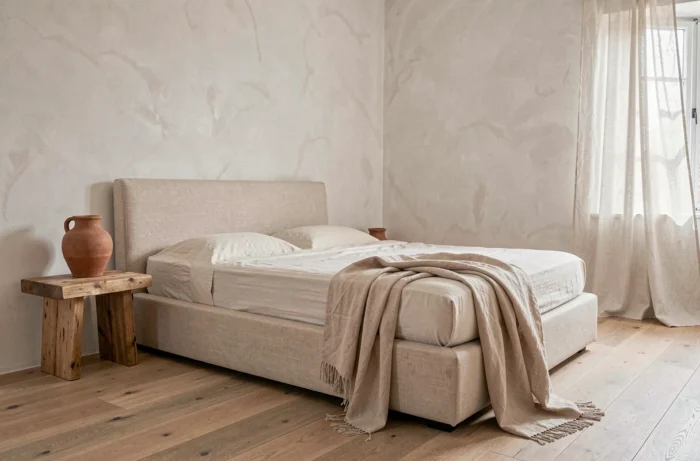
The rise of bio-sourced materials (plant fibers, cork, hemp) accompanies this trend. Their appeal goes beyond ecological arguments: these materials age better than synthetics and develop a patina that enriches the decor over time, rather than degrading it.
Thus, the interior of 2026 is built on technical as well as aesthetic choices. The method of fastening flooring, the applicable VAT rate for paint, the ability of a piece of furniture to be disassembled and reconfigured: these parameters, often overlooked in classic decor guides, determine the durability and real cost of a decoration project.