
The Senegalese real estate market attracts new profiles each year who want to start as real estate agents in Senegal. Urban growth, particularly in Dakar and secondary cities, fuels a sustained demand for transactions and property management. However, practicing this profession within a legal framework and maintaining it sustainably requires passing several steps, the logic of which differs significantly from the French or European model.
Professional Card and Legal Framework in Senegal
The starting point of any real estate agent’s career in Senegal remains obtaining the professional card. This document conditions the legal exercise of transaction, property management, and co-ownership activities. Without this card, an agent exposes themselves to sanctions and loses all credibility with notaries, banks, and institutional clients.
The administrative procedure to obtain it involves compiling a file with the competent authorities. The required documents vary, but the process remains focused on proving training or experience related to real estate, as well as having a clean criminal record.
To delve deeper into the specific conditions for accessing the profession and the detailed administrative procedures, the LT Immobilier guide for Senegal outlines the regulatory steps specific to the local context.
Beyond the card, the legal status of the agency deserves consideration from the outset. Creating a sole proprietorship, opting for an LLC, or joining a franchise are choices that impact taxation, civil liability, and the ability to sign mandates. Field feedback varies on the model most suited for beginners, as profitability heavily depends on the activity area and the targeted transaction volume.

Local Specialization: The Underestimated Lever in the Senegalese Market
Generalist content on the real estate agent profession emphasizes relational qualities or negotiation skills. These competencies matter, but in the Senegalese field, in-depth knowledge of a specific geographic area makes the difference between an agent who stagnates and one who accumulates mandates.
Specifically, specializing means mastering the prices practiced neighborhood by neighborhood, knowing the average selling times according to the type of property (land, apartment, villa), and identifying development projects likely to alter land value. An agent who knows the cadastral particularities of a sector in Dakar or Thiès inspires more trust than a generalist covering the entire country.
Defining Your Area Before Prospecting
The temptation to cast a wide net is common among beginner agents. Professionals who perform well do the opposite: they choose a limited perimeter, build their network of contacts (building caretakers, notaries, merchants) there, and become the local reference.
This approach takes time before producing results. The first weeks are used to map the existing offer, identify properties for direct sale by owners, and establish trust relationships with local stakeholders. The volume of mandates follows, provided a regular presence is maintained.
Digital Tools and Daily Prospect Management
The digitization of the profession is progressing rapidly in Senegal. A real estate agent who relies solely on word-of-mouth and paper ads deprives themselves of an increasing share of the market. Potential buyers and tenants now start their search online, and the speed of response to inquiries weighs as much as the quality of the property offered.
Several tools structure daily activity:
- A CRM (customer relationship management software) allows for centralizing contacts, scheduling follow-ups, and ensuring no prospect goes unanswered for more than a few hours.
- Social media, particularly Facebook and WhatsApp, serve as free commercial showcases where listings with photos, videos, and detailed descriptions of properties can be published.
- Local real estate listing platforms provide additional visibility and attract buyers already engaged in an active search process.
The goal is not to use all these tools simultaneously but to master two or three and consistently feed them. A rigorous follow-up of prospects generates more sales than mass prospecting without follow-up.
Automate Without Dehumanizing
The use of digital tools poses a limit: real estate remains a profession of interpersonal trust, particularly in Senegal, where direct relationships with sellers or buyers often condition the conclusion of a transaction. Automating reminders and contact sorting frees up time, but initial contact and visits require a physical presence and attentive listening.
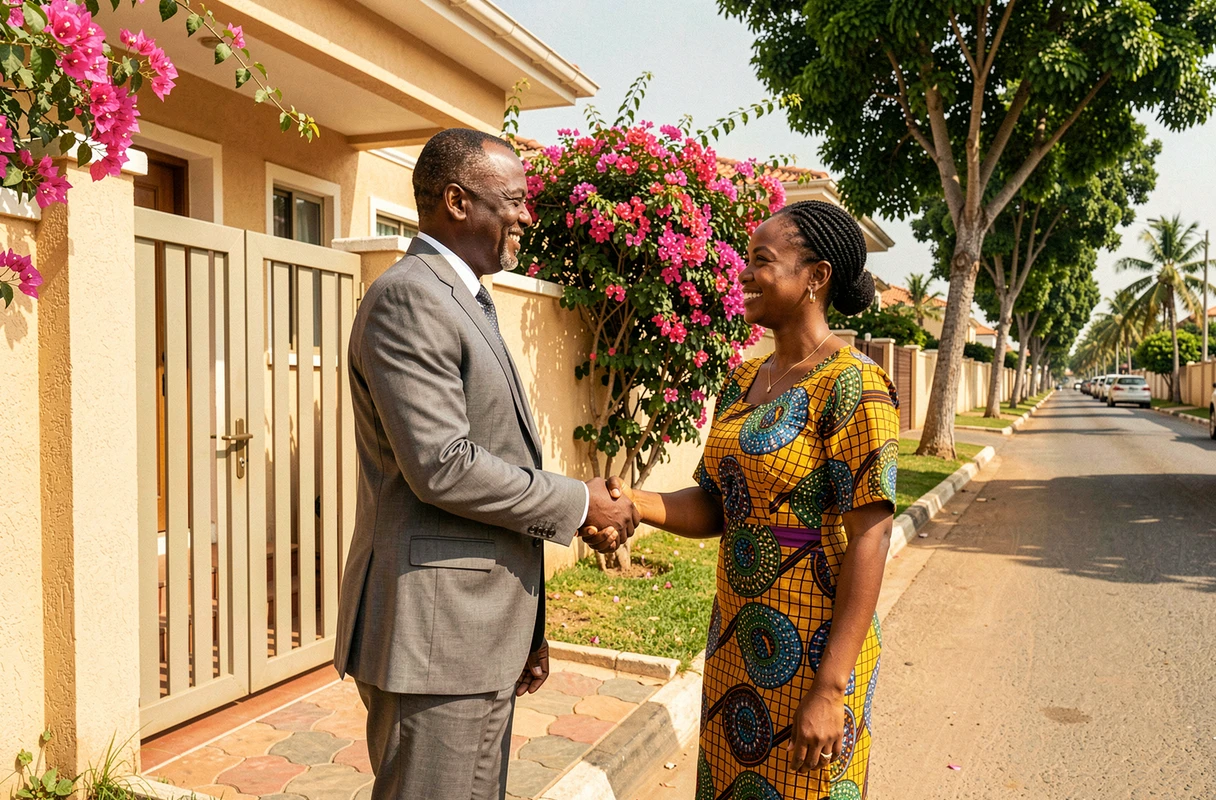
Mastering Administrative Sales Procedures in Senegal
A real estate agent in Senegal does not simply connect a seller and a buyer. Their added value lies in their ability to manage the transaction from start to finish, including the administrative aspect. Recent job offers in Dakar explicitly require a good knowledge of the administrative procedures related to sales.
The key steps in a real estate transaction involve verifying land titles, drafting or supervising the sales agreement, coordinating with the notary, and monitoring legal deadlines. A poorly assembled file can delay the sale by several weeks or even cause it to fail.
The agents who stand out are those capable of identifying potential blockages in advance:
- Incomplete or contested land titles, common in certain suburban areas
- Absence of building permits or non-compliance of existing structures
- Co-properties without formal regulations, complicating management and resale
Anticipating these obstacles before putting a property up for sale avoids aborted transactions and strengthens the agent’s reputation with notaries and clients.
The profession of real estate agent in Senegal rewards those who combine administrative rigor, local grounding, and consistency in commercial follow-up. The professional card opens the door, but it is the ability to secure each step of a transaction that transforms a beginner into a sought-after professional in the Dakar market and beyond.