
Selling a riad in Marrakech without going through an agency requires mastering steps that the intermediary usually handles for you. The real estate market in the medina attracts buyers with varied profiles (secondary residence, guest house project, rental investment), and each of these profiles has different questions during the visit. Preparing for the sale means anticipating these questions even before publishing an ad.
Verification of the land title: the prerequisite that the buyer will demand
Before setting a price or writing an ad, the first step is to go to the Land Registry to obtain an up-to-date property certificate. This document confirms that the riad is properly registered, identifies the legal owner, and shows any mortgages, easements, or registered disputes.
An independent buyer, without an agent to reassure them, will systematically ask for the land title number. If they discover a discrepancy between what you announce and what the Land Registry shows, the transaction stops. Checking the land title yourself before putting it up for sale avoids this blockage.
Riad properties located in the medina sometimes pose an additional problem: some older properties have never been registered, or their status falls under the so-called “melkia” regime (unregistered property). In this case, the registration process can take several months. It’s better to initiate it well before looking for a buyer, as the sale of riads in Marrakech between individuals requires a flawless land file to compensate for the absence of agency guarantees.
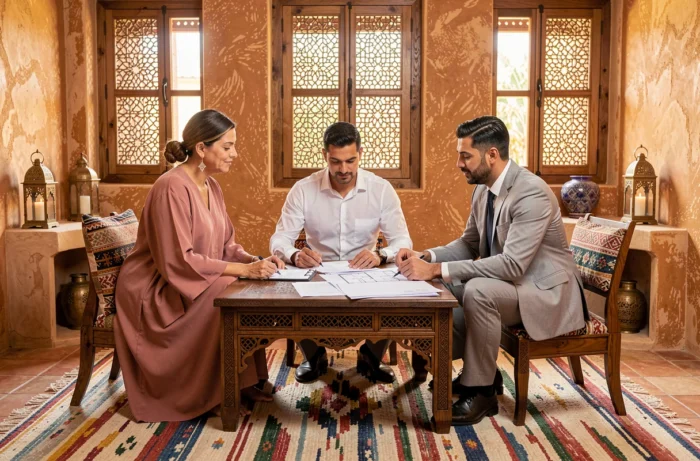
Urban planning constraints and guest house authorization in Marrakech
A riad sold as a “rental investment” or “future guest house project” is worth more on paper. However, not all riads are eligible for a tourist operating permit. The local development plan, zoning, and sometimes the structural condition of the building determine this possibility.
If you present your property as a future tourist accommodation without checking this point, you expose the buyer to disappointment and yourself to a post-sale dispute. Checking eligibility for guest house authorization before writing the ad protects both parties.
What urban planning regulations may limit
- Height extensions (adding a floor or creating a covered terrace) may be prohibited depending on the medina neighborhood and the heritage classification of the building.
- Changing the use from residential to commercial or tourist requires a specific permit that depends on municipal zoning.
- Major renovation work (modifying the load-bearing structure, creating openings) requires a building permit, even for an existing riad.
A seller who provides this information upfront stands out significantly. The individual buyer, without professional support, appreciates receiving a complete file rather than just a simple ad with photos.
Estimating the sale price of a riad: a concrete method between individuals
Without a real estate agent to produce a comparative estimate, the seller must build their price themselves. The frequent temptation is to base it on the initial purchase price plus the cost of renovations. This approach ignores market reality.
The sale price depends on the neighborhood, the living area, the actual condition of the building, and the potential for exploitation. A renovated riad with several bedrooms and bathrooms in an accessible medina neighborhood cannot be compared to a riad needing renovation in a narrow alley, even if their sizes are similar.
Building a realistic estimate
Consulting ads for comparable riads for sale (same neighborhood, similar size and condition) gives a first range. Moroccan real estate portals display enough properties to identify market prices in the medina, the Kasbah, or the palm grove.
If your riad has been operated as a guest house, a buyer will want to know the actual income. Prepare the financial statements or at least a record of the nights and revenue from the last seasons. A riad with documented operating history negotiates better than a property without data.
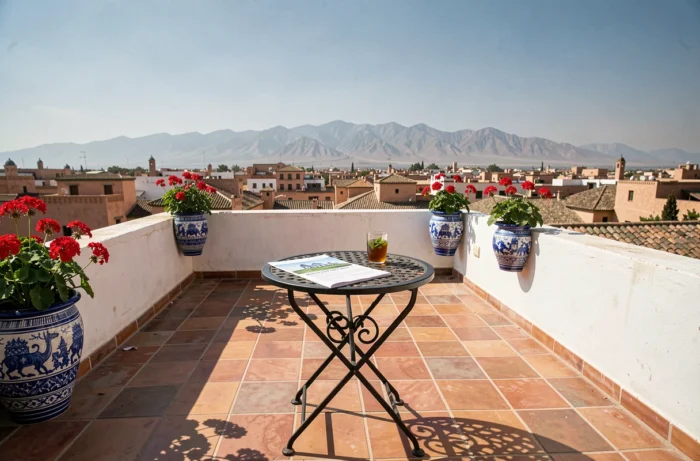
Sales file and local management: what reassures a buyer without an agency
The absence of a professional intermediary shifts the burden of trust onto the seller. Each missing document fuels doubt. Therefore, the sales file must be prepared before the first visit.
- Recent property certificate (less than three months old) issued by the Land Registry, mentioning the title number and the absence of charges.
- Plans of the riad and permits for completed work, so the buyer can verify compliance with urban planning regulations.
- Available technical diagnostics (condition of the roof, plumbing, electrical installation), conducted by a local professional.
- If the riad is operational: ongoing contracts with a local manager, activity reports, annual maintenance costs.
The presence of a reliable local manager is an increasing decision criterion for buyers, especially those residing abroad. A buyer compares the actual cost of management and maintenance before committing. If you can provide a manager’s contact and a history of expenses, you facilitate the financial projection for the buyer.
Writing the ad with the right criteria
An ad between individuals that mentions the number of bedrooms, bathrooms, total area, specific neighborhood, and land status generates more qualified inquiries. Buyers filtering on these criteria know what they are looking for. The photos should show the patio, terrace, common areas, and the actual condition of the finishes, without excessive retouching.
The land on which the riad is located, its accessibility (width of the alley, distance from a parking point), and the potential presence of overlooking neighbors are information that standard ads often omit. Mentioning them upfront filters unnecessary visits and accelerates the sale.