
The so-called “universal” leisure activities encompass a more complex reality than just a simple catalog of activities. Behind the promise of accessibility lie financial, physical, and geographical barriers that still exclude part of the public. However, the offerings have expanded in recent years, driven by public initiatives, specialized platforms, and local initiatives that aim to reduce these gaps.
Pass’Sport and public aid: what makes sports leisure financially accessible
The most documented barrier remains the cost of joining a club or association. For low-income families, an annual membership fee represents a real budgetary trade-off, even for outdoor activities like cycling or nature walks.
The Pass’Sport scheme, mentioned in the 2026 report of the National Assembly on child policies, targets young people aged 6 to 19 who receive certain allowances (back-to-school allowance, disability child education allowance). It offers a discount on registration in a sports club or approved association.
This mechanism acts as a gateway to supervised sports leisure, but it assumes that the family is aware of the scheme, identifies a partner club nearby, and completes the necessary steps. Feedback from the field varies on this point: some municipalities actively promote Pass’Sport, while others barely mention it in their communications. Financial accessibility does not guarantee practical accessibility.
Meanwhile, several local authorities are experimenting with participatory budgets directed towards leisure. Funds co-constructed with residents are used to finance equipment or free activity programs (supervised swimming, outdoor games, nature workshops for children). This co-decision-making logic is still in the minority, but it is changing how local leisure is conceived.
Nature, water, and outdoor leisure: an expanding but unevenly distributed offer
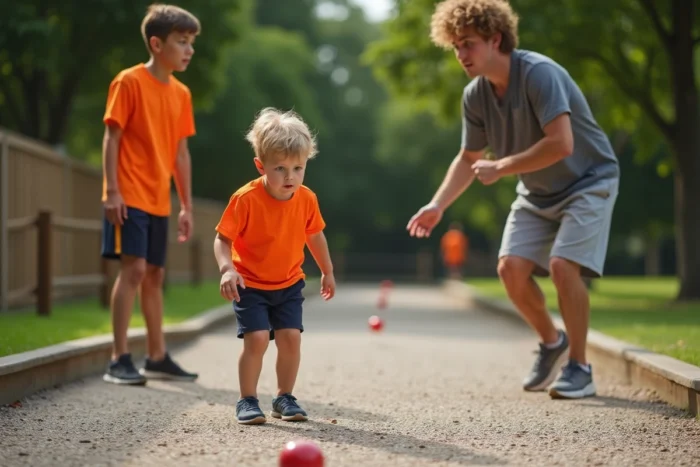
Hiking, cycling, swimming in lakes, discovering local wildlife: nature activities are among the least expensive and most sought-after leisure options by families. They often require no specific equipment and can be adapted for all ages.
However, access is still necessary. In rural areas, marked trails and developed bodies of water exist, but transportation to get there poses a problem for those without vehicles. In urban areas, green spaces large enough to accommodate outdoor activities (adventure, team games, picnics by the water) remain concentrated in certain neighborhoods.
To identify what exists near them, online directories now aggregate the leisure activities offered on Aipdb by category and location, making it easier for families and social support structures to search.
Proximity tourism, driven by the enthusiasm for “micro-adventures,” has also contributed to expanding the offer. Local authorities are creating wheelchair-accessible paths around lakes or in forests, with appropriate signage. However, these developments remain sporadic. The majority of hiking trails are not designed for people with reduced mobility.
Disability and adapted leisure: where does inclusion really stand?
The Anaé Vacances association, established in 1956, offers adapted stays in several holiday villages in France (Savoie, Var, Loire-Atlantique, Brittany). Its new center in Riec-sur-Bélon, announced for 2026, illustrates a dynamic development of inclusive offers at both sea and mountain locations.
Beyond stays, access to everyday leisure is also a concern. A recent senatorial report and the work of the Obstacle.fr observatory document the persistent gaps:
- Municipal sports facilities (swimming pools, gyms, playgrounds) show very variable levels of accessibility from one municipality to another, without a binding national reference beyond the general obligations of the law.
- Cultural activities (museums, libraries, creative workshops) are making progress in welcoming audiences with cognitive disabilities, notably thanks to guides written in Easy to Read and Understand (FALC), such as the one implemented by the municipality of Grimaud.
- Supervised sports leisure (clubs, associations) often lack trainers specifically trained to welcome people with disabilities, which limits participation even when the physical infrastructure is adapted.
In the Grand Est region, nearly 55,000 people with disabilities are supported by regional initiatives, according to figures reported by the Region. This number gives an idea of the scale of needs, but does not reflect the reality of actual access to leisure.
Seniors and isolated individuals: leisure designed to combat isolation
Accessibility is not limited to physical disabilities or financial constraints. Social isolation is a major barrier to participating in leisure activities, particularly among the elderly.
Local initiatives offer “day vacations” for isolated seniors, with collective transport to sites for walks, swimming, or cultural discovery. These programs, often supported by associations or CCAS, aim as much at social connection as at leisure itself.
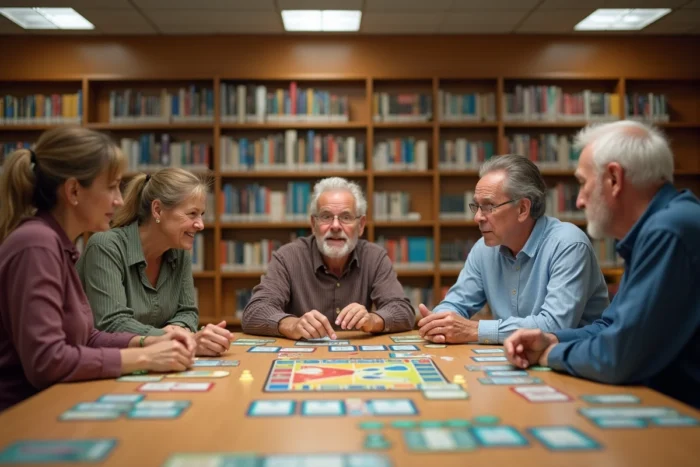
The Alzheimer Foundation also documents the cognitive benefits of certain leisure activities, such as bridge, on maintaining intellectual abilities. This type of data strengthens the argument for easier access to games and social activities for aging populations, beyond mere entertainment.
Creative leisure and indoor activities: a growing segment
Creative leisure activities (sewing, pottery, painting, woodworking) are experiencing a resurgence of interest, fueled by social media and community workshops. They have the advantage of being practicable at home, low-cost, and without specific physical requirements.
For people with reduced mobility or those living far from sports facilities, these activities represent a concrete alternative. Several municipalities are now integrating creative workshops into their public leisure programming, alongside traditional sports activities.
The available data does not allow for a precise measurement of the share of these leisure activities in overall practice. Feedback from associative structures suggests a growing demand, particularly among families with young children and seniors.
The offer of accessible leisure is progressing, but it remains fragmented. No single point of contact lists all adapted activities by territory, type of disability, or social criteria. Specialized platforms and local directories partially fill this gap. The real challenge, beyond creating activities, remains their visibility and ease of access for those who need them most.