
On the Basque Coast, when Zoé Grospiron is chaining series on her longboard before a European final, a woman watches from the parking lot, phone in hand, scheduling a meeting with a sponsor. Nathalie Ville-Grospiron is not a mother who passively watches the waves.
She has been a professional coach for about fifteen years, specializing in supporting executives and public figures. This dual positioning, as both a parent and an expert in helping relationships, creates a rare configuration in French sports.
Professional coaching and sports motherhood: Nathalie Grospiron’s dual role
We often imagine the mother of an athlete in a logistical role: preparing meals, driving to training sessions, managing laundry after competitions. Nathalie Ville-Grospiron does all of this, but she adds a layer that most parents do not have: a professional framework for understanding performance and pressure mechanisms.
Her coaching profession, practiced outside the surfing world, provides her with concrete tools to decode what her daughter is experiencing. Managing emotions before a final, taking a step back from a disappointing result, balancing a sponsorship opportunity with personal well-being: these situations mobilize exactly the skills she deploys with her professional clients.
In the portrait of Nathalie Grospiron on L’Esprit du Sport, this idea is reflected that her role goes far beyond that of a supportive parent. She structures, she filters, she sets frameworks. The boundary between family support and professional intervention becomes porous, and it is precisely here that things get complicated.
Where the invisible pressure begins
When you are a coach by profession and a parent of an athlete, the risk of over-support exists. Every maternal piece of advice carries the weight of expertise perceived as legitimate, making it more difficult for the athlete to contest or ignore it.
A regular parent saying “you should take a break” is expressing an opinion. A coach parent saying the same thing is almost making a diagnosis. The nuance changes the relational dynamic. Nathalie seems to be aware of this, as testimonies describe her as a background presence rather than a directive intervener.

The Grospiron family: growing up between Annecy and the Basque Coast with an Olympic legacy
Zoé grew up in Annecy with her mother Nathalie, her father Edgar (Olympic mogul skiing champion), and her sister Louison. This family environment was not exclusively sports-oriented, but sports held a structuring place.
The choice of surfing and the Basque Coast comes directly from Nathalie, as Zoé explained in the Caféine podcast from Surf Session. This detail shifts the usual narrative: the sporting legacy is spontaneously attributed to the medal-winning father, while the orientation towards longboarding and the geographical anchoring are maternal choices.
Carrying the Grospiron name in French sports generates immediate expectations. The media compares, sponsors project an image of dynasty. Nathalie has had to navigate this constant filter:
- Protecting Zoé from media shortcuts that reduce her journey to “Edgar Grospiron’s daughter,” while she has built her career in a completely different discipline and environment
- Managing the visibility asymmetry between a father omnipresent in search results and a mother almost absent from sports archives
- Maintaining an educational framework where performance remains one component among others, not the sole criterion for family success
Parent-manager in professional surfing: what the Grospiron case reveals
In professional longboarding, support structures are less developed than in historical Olympic sports. No federal unit dedicated to career management, no pool of specialized agents. Parents default to absorbing functions that normally belong to paid professionals.
Nathalie wears multiple hats without an official title. She is neither a licensed agent nor a certified mental coach in the sports framework, but she fulfills these roles daily. This situation is structural in women’s surfing, where revenues do not always allow for delegation.
The concrete tasks that no one sees
We rarely talk about the actual content of this work. Here is what Nathalie’s role concretely covers on a daily basis:
- Coordination between the competition calendar (World Surf League, European Championships) and Zoé’s university schedule at Kedge Business School, two agendas that almost never coincide
- Evaluation of sponsorship partnerships: duration of commitment, requested counterparty, compatibility with Zoé’s personal image
- Filtering media requests and managing communication, an area where her experience as a coach in image strategy directly comes into play
- Calibrated emotional support between competition results, knowing when to speak as a mother and when to mobilize her professional instincts
Feedback varies on how this versatility affects the mother-daughter relationship in the long term. The risk of parental burnout is real when none of these functions are formally delegated.
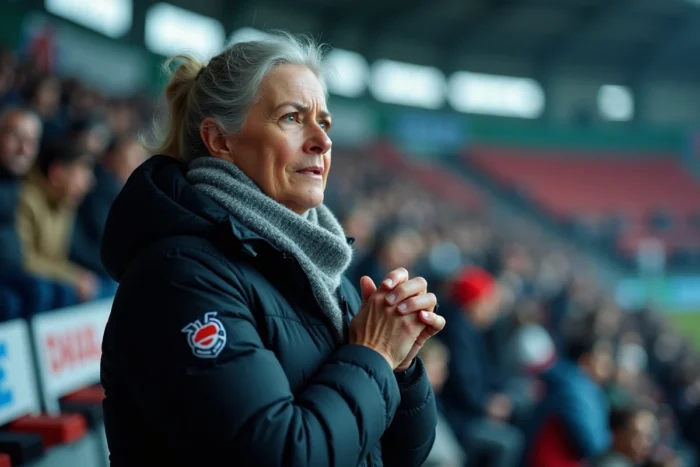
Mothers of athletes in France: why maternal work remains invisible in the sports narrative
The Grospiron case illustrates a broader pattern. In French sporting families, the media narrative almost systematically values paternal lineage. When you type “Zoé Grospiron” into a search engine, Edgar appears everywhere. Nathalie, almost nowhere.
This invisibility is not anecdotal. It reflects a structural bias: the parent who organizes, coordinates, and absorbs the mental load of daily sports remains in the background. The parent with the track record takes center stage.
Zoé has started to correct this imbalance herself by publicly mentioning her mother’s role in her interviews. It is a gesture that speaks volumes about the awareness young athletes have of this asymmetry.
Nathalie Ville-Grospiron does not need media visibility to exert her influence. Her profession as a coach, her understanding of pressure mechanisms, and her ability to set educational safeguards make her much more than a devoted mother. She is a technical resource integrated into her daughter’s performance framework, even if no organizational chart mentions it.