
Felt, wool, knit or faux fur: the materials for women’s winter hats are multiplying, along with the possible silhouettes. Rather than listing all the models on the market, this article compares the key shapes of the season based on three concrete criteria: thermal insulation, clothing versatility, and material durability.
Comparison of women’s winter hat shapes by criterion
The choice of a winter headwear rarely relies solely on style. Protection against the cold, the ability to integrate into multiple outfits, and the material’s durability weigh as heavily as aesthetics. The table below summarizes these three axes for the most sought-after models this season.
| Model | Dominant Material | Thermal Insulation | Clothing Versatility | Durability |
|---|---|---|---|---|
| Fedora | Wool felt | Medium | High | High |
| XXL Pom Pom Beanie | Acrylic or wool knit | High | Medium | Medium |
| Beret | Felt or boiled wool | Medium | High | High |
| Chapka | Faux fur / leather | Very high | Low | High |
| Balaclava | Wool or cashmere knit | Very high | Low | Medium |
| Winter Cap | Wool, tweed, corduroy | Low to medium | High | High |
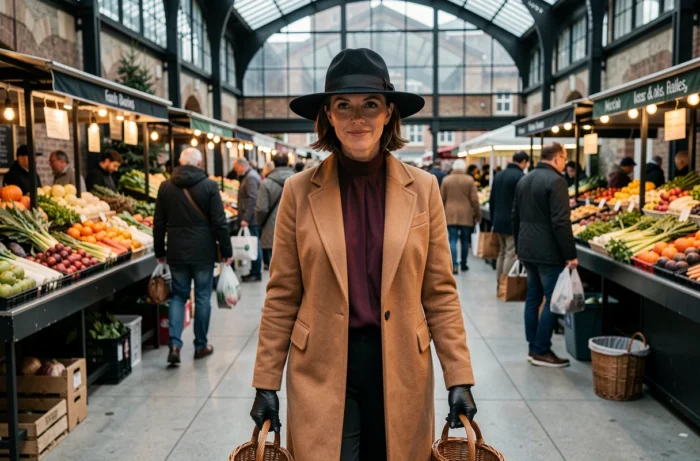
The wool felt fedora and the beret offer the best balance among the three columns. In contrast, the chapka and balaclava excel in insulation but severely limit outfit combinations. The XXL pom pom beanie falls in between, with an expressive potential that the other models do not offer.
Exploring women’s winter hat trends allows for visualizing these style differences in concrete looks, season after season.
Wool felt vs knit: what the material really changes

The material determines a hat’s longevity more than its shape. A wool felt fedora withstands light rain without losing its shape. The felted fiber creates a natural barrier against moisture and retains its structure after several seasons of use.
In contrast, an acrylic knit beanie pills faster and loses its elasticity over washes. Models made from merino wool or cashmere age better, but their price is significantly higher. Tweed and corduroy, used in winter caps, offer an interesting compromise: good longevity, decent insulation, and a texture that pairs well with both structured coats and casual jackets.
Wool felt remains the most versatile material for a winter hat, as it combines insulation, water resistance, and shape retention. Knit, being more flexible, is better suited for expressive pieces worn for one or two seasons.
Points to watch when buying
- Check the exact composition: a beanie labeled “wool” may contain a majority of synthetic fibers if the percentage is not specified
- On a felt hat, test the rigidity by pressing the brim: quality felt regains its shape immediately, while low-quality felt retains the mark
- For faux fur (chapka, winter bob), prefer a dense, short pile that does not flatten after a few wears
XXL Pom Pom Beanie and Balaclava: two fashion trends that divide
Online competitors focus on the fedora, beret, and cap. Two models deserve a closer analysis because they redefine the function of winter hats: the XXL pom pom beanie and the balaclava.
According to a fashion market analysis published on Accio in July 2026, XXL pom pom beanies in faux fur represent a rapidly growing segment. The interest lies in bright colors (burgundy red, electric blue, orange, mustard yellow), extra-large knits, and metallic or beaded details. This beanie functions more as a self-expression accessory than as a thermal basic.
The balaclava, on the other hand, has maintained its trend for three consecutive seasons. Worn tightly under a coat or loosely like a scarf-hood, it fully covers the head, neck, and sometimes the chin. Its insulation is maximal. However, its clothing versatility remains limited: it fits well into a streetwear or minimalist wardrobe, much less so in a dressed-up outfit.
Color palette associated with each trend
The dominant colors of the season guide the choice of model. Mocha mousse, deep burgundy, and anthracite dominate the autumn-winter 2025-2026 collections according to several French fashion media. These neutral to warm shades work on almost all shapes.
The XXL pom pom beanie is an exception: bright and saturated colors are a marker of assertive style. An electric blue pom pom on a mustard yellow knit does not aim for discretion. In contrast, the black or burgundy felt fedora plays the card of structured sobriety.
Wool Cap and Felt Beret: two rivals for everyday wear
For daily use in the city, two shapes consistently reappear: the winter cap and the beret. Their common point is high clothing versatility. Their difference lies in the silhouette they create.
The beret softens features and rounds the face line. It is worn slightly tilted, backward, or flat depending on the desired effect. In wool felt, it retains its shape all day. In boiled wool, it is more flexible and easily stored in a bag.
The wool or tweed cap structures the upper part of the face more. It adds a graphic, almost architectural quality. Models like the gavroche or baker boy add volume on top of the head, balancing silhouettes with long coats.
- Beret: ideal with a trench coat, straight overcoat, or fitted jacket. Works well in classic black or trendy colors (burgundy, fir green)
- Wool/tweed cap: pairs with a bomber jacket, a peacoat, or a workwear look. Textures (herringbone, houndstooth) enrich monochrome outfits
- Both models partially cover the ears, which limits their insulation in extreme cold compared to a beanie or chapka
The choice between beret and cap depends less on the season than on the existing wardrobe. A more structured wardrobe benefits from incorporating a beret, while a casual wardrobe suits a cap.
The most useful data from this comparison remains that of the initial table: no model dominates on all three criteria at once. The felt fedora comes close, but sacrifices some insulation. Choosing a winter hat comes down to prioritizing between warmth, style, and longevity.